
Table of Contents
- Why Medical Facility Cleaning Requires Specialized Expertise
- Medical Office Cleaning Standards Checklist 2026
- Top Janitorial Service Providers for Medical Facilities
- Medical Facility Disinfection Procedures and Best Practices
- Medical Office Deep Cleaning: What to Expect
- Medical Facility Floor Cleaning and Specialized Maintenance
- How to Evaluate and Select the Right Provider
- Frequently Asked Questions
Last Updated: October 15, 2026
Why Medical Facility Cleaning Requires Specialized Expertise
Medical facilities operate under strict hygiene standards far beyond standard commercial cleaning. Patient safety, staff protection, and regulatory compliance depend on protocols designed specifically for healthcare environments, the difference comes down to training, equipment, and attention to detail.
Healthcare environments present unique contamination risks. Exam rooms, waiting areas, restrooms, and common spaces require targeted disinfection of high-touch surfaces, since cross-contamination can spread infections rapidly and put vulnerable patients and staff at risk. General commercial janitorial services often fall short because they lack the specialized knowledge medical office cleaning demands.
At Heavenly Touch Janitorial Services, we’ve spent over 20 years refining our approach to medical facility cleaning across the Charleston area. The best janitorial services for medical facilities means more than routine sweeping and mopping, it requires infection prevention protocols, customized schedules, and trained staff who know which surfaces demand extra attention.
The most common mistake facility managers make is treating medical cleaning like standard office maintenance. One missed detail, a high-touch surface left unaddressed or inadequate disinfection in an exam room, can compromise patient safety and create liability exposure.
Medical Office Cleaning Standards Checklist 2026
A solid medical office cleaning standards checklist ensures nothing gets overlooked across areas with different requirements and risk levels.
Core cleaning areas that demand attention:
- Exam rooms and patient care areas
- Waiting rooms and reception areas
- Restrooms and handwashing stations
- Common areas and hallways
- High-touch surfaces throughout the facility
- Floors and specialized floor maintenance
Exam rooms require the most rigorous attention: after each patient visit, surfaces contacting skin, equipment, and instruments must be disinfected. Waiting rooms accumulate heavy foot traffic, making them cross-contamination hotspots, and restrooms demand frequent disinfection, especially sink areas and door handles.
High-touch surfaces are the critical focus. Door handles, light switches, reception counters, and elevator buttons are touched by dozens of people daily and need disinfection multiple times throughout the day, not just once during evening cleaning.
Floor maintenance varies by facility type. VCT flooring needs specialized care, propane buffing and proper maintenance prevent damage while maintaining sanitation, and carpet areas require deep cleaning protocols that remove contaminants without leaving residue. The right floor cleaning approach protects your investment while supporting infection prevention.
| Cleaning Task | Frequency | Priority Level | Impact |
|---|---|---|---|
| Exam room disinfection | After each patient | Critical | Prevents cross-contamination |
| High-touch surface disinfection | 2-3 times daily | Critical | Reduces infection transmission |
| Waiting room cleaning | Daily | High | Patient safety and perception |
| Restroom sanitation | 3-4 times daily | Critical | Infection control essential |
| Floor maintenance | Daily/weekly | High | Facility appearance and safety |
| Deep cleaning | Monthly | High | Removes accumulated contaminants |
Top Janitorial Service Providers for Medical Facilities
Heavenly Touch Janitorial Services: Comprehensive Floor Care and Post-Construction Cleanup
We lead with what matters most: specialized medical facility cleaning expertise combined with the comprehensive services healthcare facilities actually need. Over 20 years serving the Charleston area, our team understands the demands of medical offices, clinics, and healthcare environments.
Our strength lies in customized, turnkey solutions. We assess your facility’s layout, patient volume, floor types, and regulatory requirements, then build a cleaning plan for your exact needs, daily disinfection protocols, specialized floor care with propane buffing and VCT maintenance, or post-construction cleanup after facility expansion.
What sets us apart:
- Over 20 years of dedicated experience in commercial and medical facility cleaning
- Specialized expertise in floor care, including propane buffing and VCT maintenance
- Comprehensive services from daily sanitation to deep cleaning and post-construction cleanup
- Customized cleaning schedules that fit your facility’s patient flow and operational needs
- Trained staff who understand infection prevention and healthcare compliance requirements
- Turnkey solutions that simplify management across multiple properties
Facility managers consistently tell us they switched because quality remained consistent month after month. Our team treats your medical facility like we’re protecting our own patients, and that dedication keeps clients coming back.
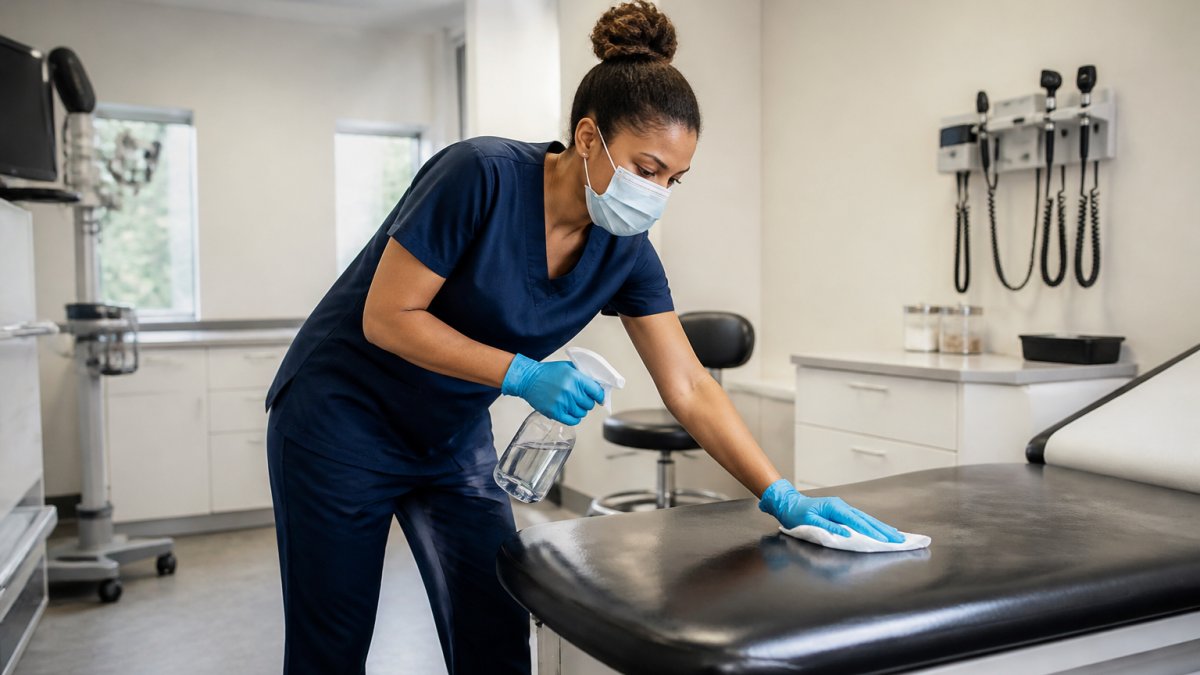
Medical offices, clinics, and outpatient centers across Charleston that need reliable, consistent cleaning with deep expertise in infection prevention and specialized floor maintenance.
Coverall: Compliance-Focused Medical Facility Cleaning
Coverall explicitly targets medical facilities as a service category, emphasizing safety and compliance and identifying healthcare environments as a specialized market segment.
The compliance focus appeals to facility managers concerned with regulatory standards, and their emphasis on safe, compliant environments suggests investment in training staff for medical facility standards.
Without detailed service information available, it’s difficult to assess their disinfection protocols, floor care capabilities, or customization options. Facility managers would need to contact them directly about high-touch surfaces, exam room protocols, and specialized floor maintenance like VCT care.
What we know:
- Medical facilities are explicitly identified as a service category
- Service description emphasizes safety and compliance
- Quote-based pricing model
Questions to ask them:
- What disinfection protocols do you use in exam rooms and waiting areas?
- How do you handle high-touch surface disinfection frequency?
- Do you offer specialized floor care like VCT maintenance or propane buffing?
JAN-PRO: Franchise-Based Commercial Janitorial Services
JAN-PRO operates as a franchise model offering commercial cleaning services that include medical facility cleaning. The franchise structure means quality and consistency can vary depending on the individual franchise owner serving your area.
Medical facility cleaning is listed as a service offering, indicating some healthcare-specific protocols, but the franchise model introduces variability, your experience depends heavily on the local franchisee’s training, equipment investment, and commitment to medical facility standards.
Facility managers considering JAN-PRO should ask the local franchisee about their medical facility experience, disinfection protocols, staff training, and service consistency. The model can work well with a strong healthcare-experienced franchisee, but it requires more due diligence than corporate-operated services.
Franchise model considerations:
- Service quality varies by franchise location
- Local franchisee’s experience with medical facilities matters significantly
- Consistency across multiple properties may be challenging
Hi Shine: Dedicated Teams for Medical and Biotech Facilities
Hi Shine describes dedicated commercial janitorial teams serving medical facilities alongside biotech, legal, and corporate environments. The emphasis on dedicated teams suggests consistent staff assigned to accounts rather than rotating personnel, supporting continuity and facility familiarity.
Positioning medical facilities as a primary service category indicates specialized knowledge, and including biotech facilities suggests they understand contamination control beyond standard commercial cleaning.
The supplied information doesn’t detail their disinfection procedures, high-touch surface protocols, or floor care capabilities. Facility managers would need to contact them to understand their approach and whether they offer the depth of service your facility type needs.
What we know:
- Dedicated teams serve medical facilities
- Medical and biotech facilities are primary service categories
- Team consistency supports facility familiarity
- Quote-based pricing
Medical Facility Disinfection Procedures and Best Practices
Effective disinfection in medical facilities requires more than standard cleaning. Infection prevention depends on knowing which surfaces present the highest contamination risk and applying appropriate methods to each area.
High-touch surfaces demand the most frequent attention.
Exam rooms present the highest cross-contamination risk. After each patient visit, all surfaces contacting skin or equipment, exam tables, armrests, door handles, light switches, shared equipment, require disinfection.
Restrooms demand aggressive disinfection protocols. Toilets, sinks, faucet handles, and door handles are contamination hotspots, and high-traffic restrooms need disinfection every 2-3 hours during operating hours.
Common areas accumulate contamination from foot traffic and shared surfaces. Hallway handrails, elevator buttons, and waiting area seating all need regular disinfection, daily is the minimum standard for medical facilities.
Disinfectant selection matters. Hospital-grade disinfectants are formulated to kill pathogens relevant to healthcare settings (the EPA). Contact time, how long disinfectant must remain wet on a surface, varies by product.
Skipping disinfection of high-touch surfaces or using inadequate contact time creates a false sense of security. Contaminated surfaces can transmit infections to vulnerable patients, creating liability and compromising the facility’s reputation.
Medical Office Deep Cleaning: What to Expect
Deep cleaning goes beyond daily sanitation, addressing accumulated dust, debris, and contaminants routine cleaning misses. For medical facilities, it’s essential for infection prevention and a professional environment.
Deep cleaning typically includes baseboards, light fixtures, ceiling vents, and areas behind equipment, which accumulate dust that can harbor pathogens. Quarterly or semi-annual deep cleaning prevents contamination buildup.
Floor deep cleaning removes embedded dirt and disinfectant residue. VCT floors benefit from stripping and resealing, while carpet areas require extraction cleaning that removes contaminants deep within fibers, restoring appearance while supporting sanitation goals.
Post-construction cleanup represents a specialized deep cleaning challenge.
Many facility managers underestimate deep cleaning frequency. Monthly deep cleaning in high-traffic areas and quarterly deep cleaning in lower-traffic areas prevent contamination accumulation, reduce infection risk, and extend the life of facility finishes.
Medical Facility Floor Cleaning and Specialized Maintenance
Floor care in medical facilities requires specialized knowledge and equipment. Different floor types demand different approaches, and improper maintenance damages finishes while compromising sanitation.
VCT (vinyl composite tile) flooring is common in medical facilities. It’s durable, easy to clean, and cost-effective. However, VCT requires specialized care. Propane buffing maintains the finish without damaging the tile.
Carpet areas require extraction cleaning rather than surface vacuuming alone, since extraction removes contaminants deep within fibers where vacuuming can’t reach. Quarterly extraction cleaning prevents odors, staining, and contamination buildup.
Sealed concrete or epoxy floors need specialized cleaning to maintain the seal, since harsh chemicals or improper equipment can damage sealed finishes. Professional floor care preserves the seal while maintaining sanitation.
Floor cleaning frequency depends on traffic and contamination risk: high-traffic waiting rooms and hallways need daily cleaning, and exam rooms need cleaning after each patient visit. The right schedule prevents contamination while managing operational costs.
How to Evaluate and Select the Right Provider
Choosing the right janitorial service for your medical facility requires evaluating more than price. Service quality, consistency, specialized knowledge, and accountability matter more than saving a few dollars monthly.
Start by assessing the provider’s medical facility experience. Ask about staff training protocols, infection prevention requirements, and disinfection procedures, providers with genuine expertise answer confidently with specifics.
Request references from medical facilities they currently serve.
Evaluate service customization.
Assess accountability mechanisms: how they handle complaints, what quality assurance processes they use, and whether they conduct regular facility audits.
Consider equipment and product capabilities: specialized floor care equipment for VCT maintenance, appropriate equipment for post-construction cleanup, and hospital-grade disinfectants. These capabilities matter for comprehensive service.
The best janitorial services for medical facilities combine specialized healthcare knowledge, consistent quality, customized service plans, and genuine accountability. Price matters, but it shouldn’t be the deciding factor when patient safety and facility compliance are at stake.
Selecting the right janitorial service for your medical facility is one of your most important operational decisions.
Frequently Asked Questions
What should you look for in a medical facility cleaning service?
Look for providers with demonstrated experience in healthcare environments, trained staff familiar with infection-control protocols, and the ability to handle specialized cleaning of high-touch surfaces, exam rooms, and waiting areas. Verify their knowledge of medical facility disinfection procedures and ask about their quality assurance methods. Confirm they offer customized cleaning plans tailored to your facility’s specific needs and can provide references from similar medical practices or clinics.
What is the difference between janitorial cleaning and healthcare environmental services?
Janitorial services focus on general facility maintenance and tidiness, while healthcare environmental services are specialized to meet strict infection-prevention standards required in medical settings. Healthcare cleaning includes targeted disinfection of high-touch surfaces, exam-room protocols, restroom sanitation, and adherence to regulatory compliance requirements. Medical facility cleaning demands staff training in cross-contamination prevention and use of healthcare-grade disinfectants, making it more rigorous than standard commercial cleaning.
How often should a medical office be professionally cleaned?
Most medical facilities require daily janitorial services, with high-touch surfaces cleaned multiple times throughout the day. Exam rooms and waiting areas typically need thorough cleaning between patient visits. Deep cleaning of carpets, floors, and less-frequently-touched surfaces should occur weekly or monthly depending on patient volume and facility layout. Your provider should create a customized cleaning schedule based on your specific medical office layout, patient traffic, and infection-control standards to maintain a safe environment.
How can a medical facility verify a cleaning provider’s infection-control procedures?
Request documentation of staff training in infection prevention and control, ask about the disinfectants and cleaning products they use, and inquire about their quality assurance and audit methods. A reputable provider should be able to explain their medical facility disinfection procedures in detail and provide references from other healthcare clients. Ask to see their cleaning protocols for high-touch surfaces, exam rooms, and restrooms, and confirm they stay current with healthcare cleaning standards and best practices.