
Table of Contents
- Step 1: Define Your Office Cleaning Scope of Work Template
- Step 2: Questions to Ask a Commercial Cleaning Company Before You Sign
- Step 3: Build a Small Office Cleaning Schedule That Fits Your Space
- Step 4: Compare Commercial Cleaning Service Quotes and Cost Drivers
- Step 5: Set Up a Commercial Cleaning Quality Control Checklist
- Step 6: Lock Down Security and Access Procedures for Cleaning Crews
- Step 7: Write Contract Terms and Service-Level Expectations That Protect You
- Frequently Asked Questions
Last Updated: October 13, 2026
Step 1: Define Your Office Cleaning Scope of Work Template
The fastest way to end up with a cleaning company that disappoints you is to hire one without a written scope. A scope of work is the single document that decides whether your office cleaning service succeeds or fails.
Here’s how to avoid that.
What Belongs in Every Scope Document
Your scope should list every task, how often it happens, and what “done” looks like. Build it as a simple checklist:
- Floors: vacuum, mop, and buff on a set schedule
- Restrooms: disinfect fixtures, restock supplies, empty bins
- Break rooms: wipe counters, clean appliances, remove trash
Write the frequency next to each task. Daily, weekly, monthly. Then note any area that needs special care, like a server room or a medical suite.
Photograph each room before the first walkthrough and attach the images to the scope. When a dispute comes up later, you have a baseline to point to instead of two different memories of the same office.
A common mistake is leaving frequency blank. “As needed” is not a schedule. It’s an invitation for inconsistency.
Step 2: Questions to Ask a Commercial Cleaning Company Before You Sign
The right questions separate a reliable commercial cleaning company from one that just talks a good game. Ask these before any contract:
- Are you licensed, bonded, and insured? Ask for the certificate.
- Who actually cleans our office, and are they your employees?
- What training do your staff complete before they start?
- How do you handle a complaint or a missed task?
The answers tell you more than the price ever will.
Verifying Licensing, Bonding, and Insurance
Ask for proof in writing. A bonded and insured provider protects you if something is damaged or a worker is hurt on your property. Never take a verbal yes. Request the certificate and check the dates.
Staff Training, Screening, and Background Checks
Consistency comes from trained, screened staff, not from whoever is available that night. Ask how new hires are vetted and how ongoing training works. A provider that can’t answer this clearly is a risk.
Skipping the insurance check is the most expensive shortcut in this process. If an uninsured cleaner is injured in your office, the claim can land on your business. Always get the certificate before the first visit.
Step 3: Build a Small Office Cleaning Schedule That Fits Your Space
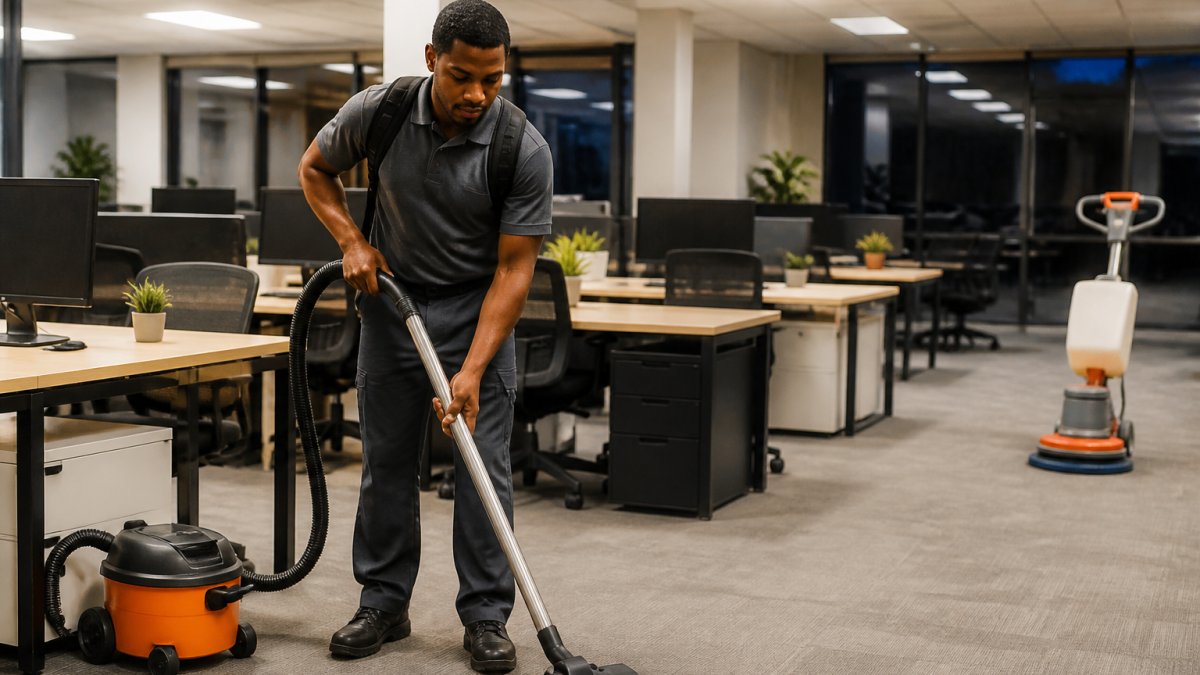
Your small office cleaning schedule should match how your space is actually used, not a generic template. A 2,000-square-foot office with ten people needs a very different plan than a clinic with a waiting room and strict hygiene needs.
Start with these questions:
- How many people use the space each day?
- Which rooms get the most traffic?
- Do you have clients or patients walking through?
- What surfaces need regular deep cleaning?
Match Frequency to Room Type, Not Just Square Footage
A common pattern in small offices is to set one frequency for the whole suite and then wonder why restrooms look tired by Wednesday. Instead, assign a cadence per room type:
- Restrooms: daily service on business days; mid-day touch-up if you have more than about 15 people per restroom.
- Break rooms and kitchens: daily trash and counter wipe; weekly appliance detail.
- Open work areas and desks: two to three visits per week for dusting and high-touch wipe-down; daily vacuum in high-traffic aisles.
- Entryways and glass: daily spot-clean; weekly full glass and partition detail.
Write the frequency next to each task in your scope so the schedule and the scope agree.
After-Hours vs. Daytime Cleaning Frequency
After-hours cleaning keeps crews out of your team’s way and works for most offices. Daytime cleaning suits spaces that need constant attention, like lobbies and restrooms in a busy clinic.
Pick a frequency you can sustain. Three visits a week done well beats five visits done poorly. If your budget is tight, protect restrooms, entries, and floors first, then add desk dusting and detail work as the budget allows.
Build a Turnkey Transition Plan for Move-Ins and Post-Construction
Scheduling is not just recurring service. If you are moving into a new suite or finishing a build-out, you need a one-time deep clean and post-construction cleanup before your first regular visit. That pass removes drywall dust, adhesive residue, paint overspray, and construction debris that recurring service is not priced to handle.
A common mistake is leaving frequency blank. “As needed” is not a schedule. It’s an invitation for inconsistency.
Step 4: Compare Commercial Cleaning Service Quotes and Cost Drivers
Comparing quotes on price alone is the mistake that sinks most small-office cleaning budgets. When you compare commercial cleaning service proposals, look at what’s included, not just the bottom line.
The main cost drivers are:
- Square footage and number of rooms
- Cleaning frequency and service schedule
- Floor types and the care they need
- Level of detail, like disinfection or deep cleaning
A low quote often means fewer tasks, not a better deal. Ask each provider to price the same scope so the numbers are actually comparable.
| What to Compare | Why It Matters |
|---|---|
| Tasks included | Low quotes often cut restroom or floor care |
| Frequency | Fewer visits lower the price but raise the mess |
| Floor care scope | Buffing and VCT work change the cost |
| Staff training | Trained crews cost more and last longer |
| Insurance proof | Protects you from liability claims |
The cheapest quote is rarely the cheapest service. Price the same scope across providers so you’re comparing apples to apples, then weigh quality and reliability alongside the number.
Pricing depends on your space, schedule, and tasks. We recommend getting a custom estimate rather than guessing from a generic rate.
Step 5: Set Up a Commercial Cleaning Quality Control Checklist
A commercial cleaning quality control checklist turns “it looks clean” into something you can actually measure. Without one, quality drifts after the first month.
Build your checklist around what matters most:
- Restrooms: fixtures, floors, supplies, odor
- Floors: vacuum lines, buffing, edge detail
- Surfaces: dust-free desks, wiped high-touch points
- Trash: emptied bins, fresh liners, no overflow
Score each item on a simple scale, like pass or fail. Do a walkthrough on a set day each week.
Quality Inspections and Performance Monitoring Over Time
Track your scores over time instead of judging each visit in isolation. A provider that holds steady for six months is reliable. One that starts strong and slips by month three is a pattern, not a fluke. Share your notes with your account manager and ask for a fix, not an excuse.
Do your inspection at different times of day and on different days of the week. A crew can look great on a Tuesday morning and miss the same corner every Friday. Varying your walkthroughs catches the gaps a fixed schedule hides.
Step 6: Lock Down Security and Access Procedures for Cleaning Crews
Security and access rules protect your data, your equipment, and your people. After-hours crews often work alone in your office, so you need clear rules in writing.
- Issue keys or codes only to named staff
- Keep a sign-in log for every visit
- Set alarm and lock-up steps in writing
- Restrict access to server rooms and file storage
Ask how the provider handles turnover. When a cleaner leaves, who collects the key? A provider without a clear answer is a liability.
Step 7: Write Contract Terms and Service-Level Expectations That Protect You
Your service agreement is where reliability gets locked in. Spell out the scope, the schedule, and what happens when something goes wrong. Most small-office disputes are not about effort; they are about expectations that were never written down. A service-level agreement (SLA) fixes that by turning vague promises into measurable commitments.
Include these terms:
- Exact tasks and frequency from your scope document
- Response time for complaints and re-cleans
- Notice period for canceling or changing service
- Insurance and bonding requirements
Service-Level Expectations to Define in Writing
Ask the provider to commit to specific numbers, not adjectives. Reasonable starting points that many small offices use:
- Complaint acknowledgment: within one business day.
- Re-clean of a missed or substandard area: within 24 to 48 hours of notice.
- Scheduled visit start window: within a stated window, with notice if the crew will be late.
- Substitute coverage: a trained replacement when the regular cleaner is out, not a skipped visit.
If a provider will not put response times in writing, treat that as a signal about how complaints will be handled after signing.
Trial Periods, Cancellation, and Scope Changes
A trial period protects both sides. A 30- to 60-day trial with a defined review at the end lets you test reliability before committing to a long term. After the trial, a common structure is a month-to-month agreement or a term contract with a cancellation notice of 30 days. Check what happens if you need to reduce frequency, add a floor-care pass, or pause service during a slow season.
Remedies for Missed Cleanings and Repeat Issues
Define what happens when a visit is missed or an area fails inspection. Typical remedies include a make-up visit at no additional charge, a credit against the next invoice, or a corrective action plan from the account manager. For repeat issues, ask for a root-cause fix: is it a training gap, a scheduling gap, or a supply gap? A provider that tracks repeat issues and reports back is easier to hold accountable than one that only responds visit by visit.
Measuring Performance After You Sign
A contract is only as good as the data behind it. Track a few simple KPIs so your 30, 60, and 90 day reviews are based on evidence:
- Checklist completion rate per visit
- Inspection scores by room type
- Complaint resolution time
- Repeat issues by location
Share the numbers with your account manager and ask for a written response on any trend that is slipping. This is also where a turnkey provider earns its keep: one point of contact for recurring service, deep cleaning, floor care, and post-construction cleanup means fewer handoffs and clearer accountability.
A clear contract protects both sides. Put response times, remedies, trial terms, and KPIs in writing, then review them on a schedule. That is how you turn a cleaning vendor into a dependable service partner.
Frequently Asked Questions
What should I look for when choosing a commercial cleaning service for a small office?
Start with a written scope of work that lists every task, room, and frequency. Then verify licensing, bonding, and insurance, ask how staff are trained and screened, and request a detailed proposal instead of a price-only quote. A commercial cleaning service that provides a customized cleaning plan, names its account manager, and offers after-hours cleaning with a clear service schedule is usually easier to hold accountable than one that only quotes a flat rate.
What questions should I ask an office cleaning company before hiring?
Ask who supervises the crew, how quality inspections are documented, what happens when a task is missed, and whether the same team cleans your office each visit. Request references from similar-sized offices and check customer reviews. Confirm bonding, insurance, and background checks in writing. Finally, ask how they handle restroom cleaning, waste removal, dusting, vacuuming, and floor care, since those tasks drive most complaints in small offices.
How often should a small office be professionally cleaned?
Most small offices do well with cleaning three to five times per week, with daily restroom cleaning and trash removal. Offices under about 2,000 square feet with light traffic can often manage two or three visits per week plus a monthly deep cleaning. High-traffic spaces like medical suites may need daily service. Match frequency to square footage, headcount, and whether clients visit, then adjust after the first month based on what your quality control checklist shows.
How can I compare commercial cleaning proposals fairly?
Put every proposal on the same page: square footage, cleaning frequency, task list, supplies included, supervision, and inspection process. Convert each quote to a per-visit cost so you can compare like for like. Ask each provider to state what is not included, such as floor stripping, carpet cleaning, or post-construction cleanup. A lower per-visit cost often reflects a shorter task list, so weigh scope and consistency alongside price before deciding.