
Table of Contents
- What Commercial Floor Cleaning Services in Summerville Actually Include
- Commercial Floor Stripping and Waxing: When Your Floors Need a Full Reset
- VCT Floor Maintenance Services: Protecting Vinyl Composition Tile
- Propane Buffing Benefits for High-Traffic Commercial Floors
- Industry-Specific Floor Care: Medical Offices, Schools, and Retail
- Carpet Deep Cleaning and Hard Surface Restoration
- What Floor Care Really Costs: ROI and Budget Planning
- Eco-Friendly Products and Sustainable Floor Maintenance
- Frequently Asked Questions
Last Updated: September 20, 2026
What Commercial Floor Cleaning Services in Summerville Actually Include
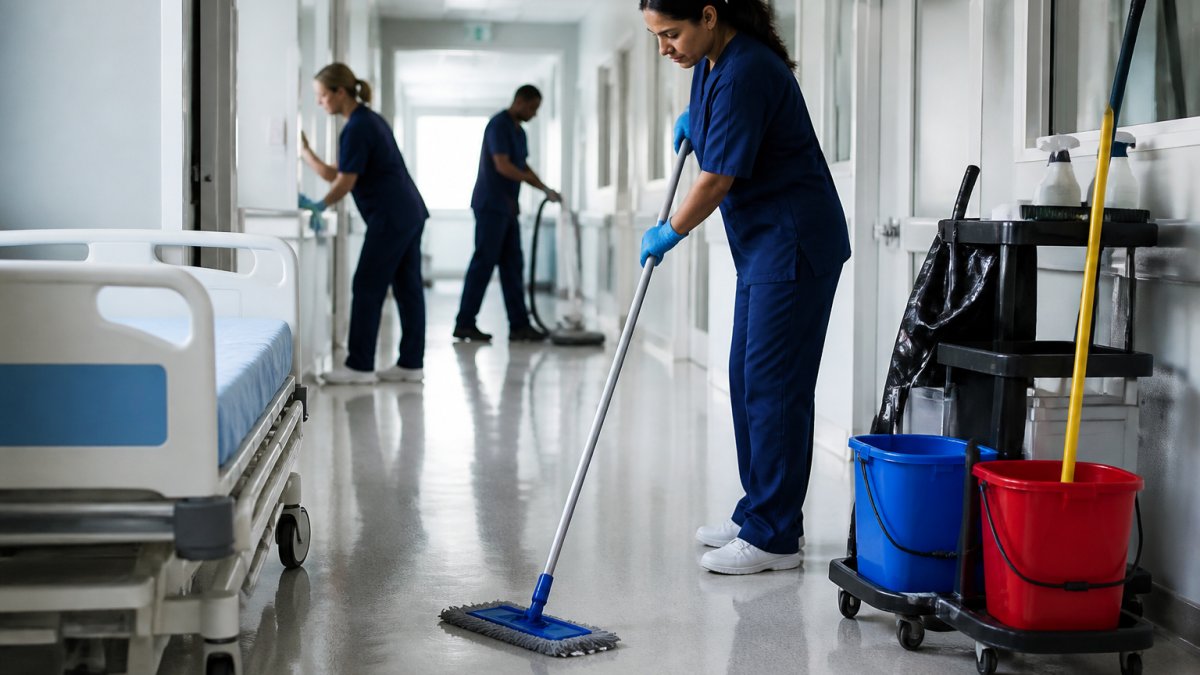
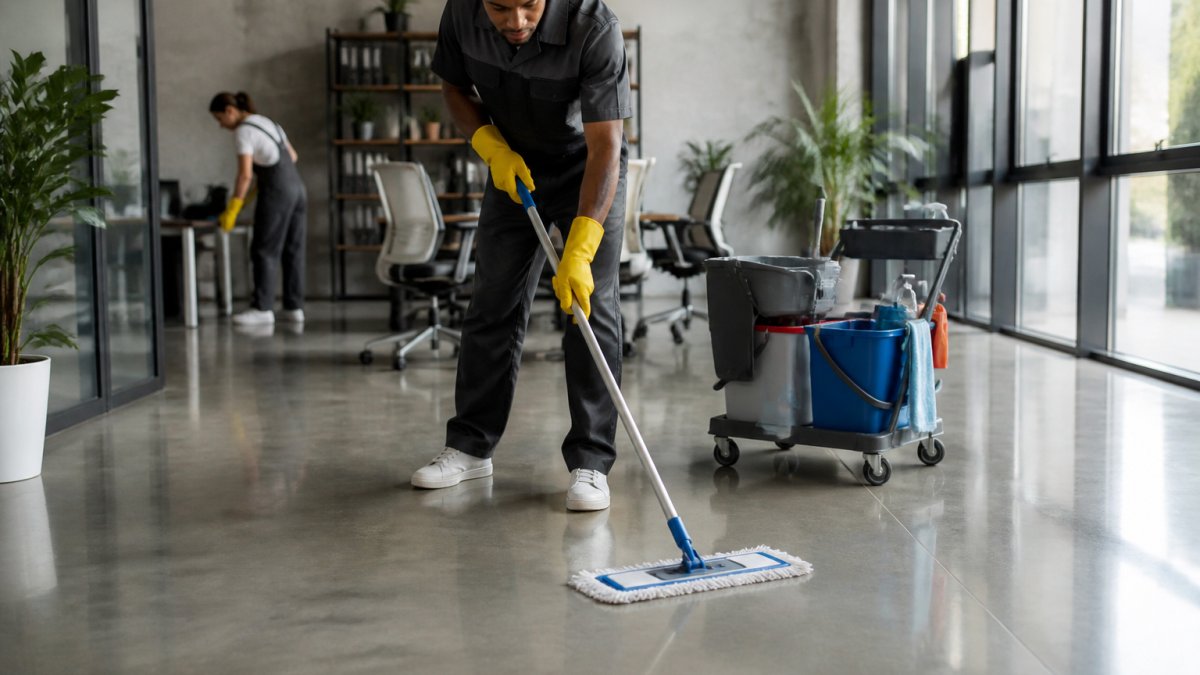
Commercial floor cleaning services in Summerville cover far more than a mop and bucket. A proper program combines daily maintenance, periodic deep cleaning, and long-term surface protection tailored to each floor type. This guide from Heavenly Touch Janitorial Services, LLC breaks down each service, when you need it, and how to budget for it.
Commercial Floor Stripping and Waxing: When Your Floors Need a Full Reset
Commercial floor stripping and waxing is the process of removing all old finish and buildup down to the bare surface, then applying fresh protective coats. It resets a floor that cleaning alone can no longer restore.
Signs It’s Time to Strip and Rewax
- The finish looks yellowed, cloudy, or patchy despite regular cleaning
- Scuff marks no longer respond to buffing
- You can see uneven color where traffic is heaviest
- The floor feels tacky or shows visible buildup near entries
- It has been more than a year since the last full strip
A common mistake is stripping too often, aggressive chemicals shorten floor life. A qualified provider will assess whether you need a full strip or just a scrub-and-recoat, which costs less and takes less time.
VCT Floor Maintenance Services: Protecting Vinyl Composition Tile
VCT floor maintenance services keep vinyl composition tile looking sharp through scheduled cleaning, sealing, and finish renewal. VCT is durable and affordable, but needs consistent care to hold up.
A practical maintenance rhythm looks like this:
|
Frequency |
Task |
Purpose |
|---|---|---|
|
Daily |
Dust mop and spot clean |
Remove grit before it scratches |
|
Weekly |
Auto-scrub with neutral cleaner |
Lift embedded soil |
|
Monthly |
Burnish or buff |
Restore shine and level the finish |
|
Quarterly |
Scrub and recoat |
Rebuild worn finish layers |
|
Annually |
Full strip and rewax |
Reset the entire surface |
Propane Buffing Benefits for High-Traffic Commercial Floors
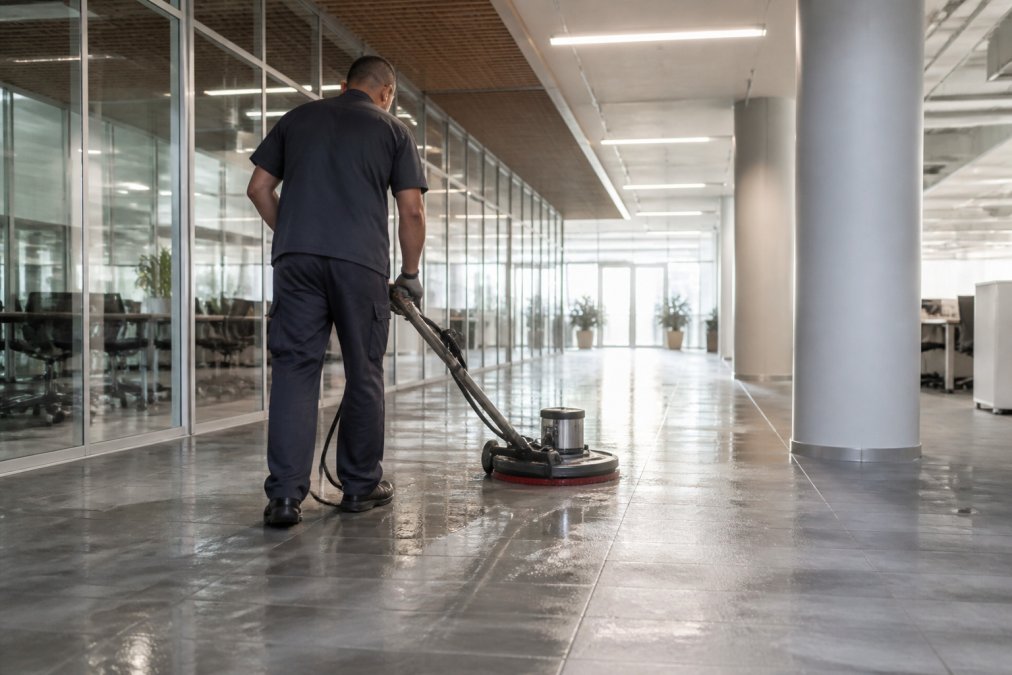
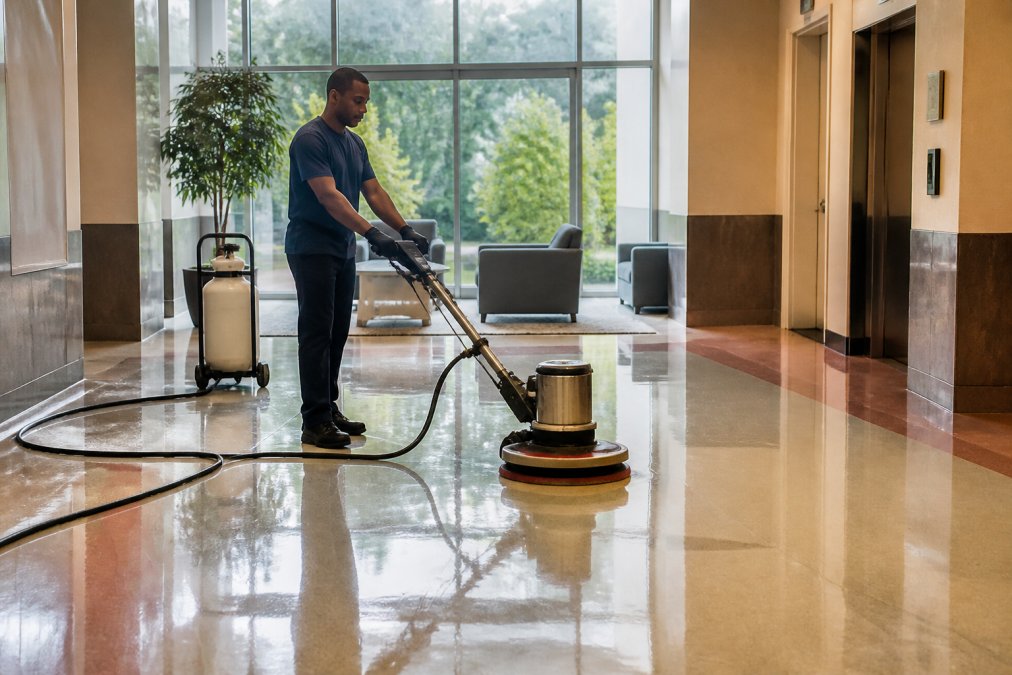
Propane buffing delivers a deeper, faster shine than standard electric buffers and holds up better in high-traffic areas. Higher torque and sustained speed produce a harder, more reflective finish that resists scuffing.
Industry-Specific Floor Care: Medical Offices, Schools, and Retail
Most commercial floor cleaning pages treat every building the same. In practice, a medical clinic’s floor care plan looks nothing like a retail store’s, even with identical square footage and VCT tile. Four variables drive the difference: what soils the floor sees, who walks on it, when the space can be closed, and what the facility must prove to a regulator or inspector.
Here is how the major facility types actually diverge.
Medical and Dental Offices
Exam rooms, waiting areas, and procedure spaces generate a specific mix of soil: body fluids, topical ointments, adhesive residue from tape and bandages, and fine dust from exam table paper. Standard neutral cleaner does not fully lift adhesive residue and does nothing for bloodborne pathogen concerns.
A medical floor plan typically calls for:
- EPA-registered hospital-grade disinfectant on hard surfaces in patient-contact areas, applied after soil removal, not as a substitute for it. Disinfectant cannot penetrate soil, so the cleaning step has to come first.
- Slip-resistant finish in restrooms, break rooms, and any area where water or gel can reach the floor. High-gloss finish in a wet area is a liability, not a feature.
- Scheduled cleaning around patient hours, not during them. Many practices prefer pre-opening service so the floor is dry and the air has cleared before the first appointment.
- Carpet care in waiting rooms using low-moisture or encapsulation methods when the space cannot be closed for a full day of dry time.
Schools and Daycare Facilities
School floors take a beating no other facility type matches: gymnasium traffic, cafeteria spills, art room paint and clay, playground grit, and hundreds of small feet in the same corridors within 20 minutes.
The practical differences:
- Durability beats appearance. A finish that looks great on day one but scuffs out in three weeks is the wrong finish. Schools typically need a harder, higher-solids finish that can take abrasion.
- Cleaning windows are tight. Most work happens after dismissal, on in-service days, or during breaks. Full strip-and-wax jobs are usually scheduled for summer, winter, or spring break because the floor needs to be off-limits for the duration.
- Chemical selection matters more. Products used in occupied buildings during the day need to be low-odor and low-VOC. Many districts now specify green-certified products in their bid documents.
- Cafeteria and restroom floors need degreasing and slip-resistant treatment on a separate, more frequent cycle than classrooms.
Retail Stores and Showrooms
Retail is the one facility type where the floor is a merchandising asset. A dull, scuffed floor makes the store look tired, and customers read that as a signal about the products on the shelves.
What that changes:
- Service timing is non-negotiable. Most retail floor work happens before the store opens or after it closes. A crew that shows up mid-day with a propane buffer is not a good fit, no matter how good the work is.
- Entrance matting and entry-zone care carry outsized weight. The first 10 to 15 feet inside the door is where 80% of tracked-in grit lands, and it is where the finish wears through first.
- High-gloss burnishing is usually worth the cost in retail because the reflective floor is part of the visual experience. In a warehouse or back office, it usually is not.
- Fixture and rack protection matters. Buffers and auto-scrubbers have to work around gondolas, end caps, and display tables without scuffing them.
Restaurants and Food Service
Kitchen floors are their own category. Grease, food debris, and constant moisture create a slip hazard no standard janitorial plan addresses. Quarry tile with slip-resistant finish, nightly degreasing, and weekly or biweekly grout line cleaning are baseline requirements, not upgrades.
Warehouses and Light Industrial
Concrete floors in warehouses and production areas are usually sealed rather than finished. The priority is dust control, forklift wear, and keeping surfaces clean enough for safety walkways and inspections. Burnishing and high-gloss finish are wasted money here; densifiers and sealers are not.
Why This Matters When You Compare Bids
A provider quoting the same per-square-foot rate for a dental office and a warehouse is either skipping the dental office’s required work or overcharging the warehouse. The right bid reflects facility type, soil load, access window, and finish system, not just square footage.
Carpet Deep Cleaning and Hard Surface Restoration
Carpet extraction reaches what vacuuming cannot. Hot-water extraction lifts embedded soil, allergens, and residue from deep within carpet fibers and removes it entirely rather than pushing it around.
What Floor Care Really Costs: ROI and Budget Planning
Most commercial floor cleaning pages stop at “prices vary by square footage.” True, but not useful. A facility manager building a floor care line item needs to understand what drives the number, what alternatives cost, and how to compare a low bid against a comprehensive one.
What Actually Drives the Price
Floor care pricing is built from five inputs. Change any one and the quote moves:
- Square footage, the base unit of measurement, but rarely the whole story. A 10,000-square-foot open lobby is cheaper per foot than 10,000 square feet split across 40 small offices.
- Surface type, carpet, VCT, LVT, ceramic tile, quarry tile, polished concrete, terrazzo, and natural stone all require different equipment, chemicals, and labor time. Stone restoration alone can cost several times what VCT maintenance does per square foot.
- Current condition, a floor that has been maintained on a schedule needs a recoat. A floor that has not been touched in three years needs a full strip, and possibly a restoration pass before finish goes down.
- Service frequency, daily, weekly, monthly, and quarterly tasks are priced differently. Daily dust mopping is inexpensive per visit; quarterly scrub-and-recoat is not.
- Access and timing, after-hours, weekend, and holiday work carries a labor premium. So does a building with freight elevators, security check-in, or tight loading dock windows.
The Three Cost Categories to Separate in Any Bid
A useful floor care budget separates three things often bundled into one monthly number:
- Routine maintenance, dust mopping, damp mopping, auto-scrubbing, vacuuming, spot treatment. This is the recurring line item.
- Periodic restoration, burnishing, scrub-and-recoat, carpet extraction, grout cleaning. These happen on a cycle, not every visit.
- Capital-level work, full strip and rewax, stone grinding and polishing, concrete densification, floor replacement. These are project costs, not maintenance costs, and they should be budgeted separately.
The ROI Mechanism: Why Maintenance Beats Replacement
The financial case for scheduled floor care isn’t that cleaning is cheap, it’s that replacement is expensive and disruptive, and the gap between the two is where savings live.
The mechanism works in three steps:
- Finish is sacrificial. The protective finish layer absorbs abrasion, scuffing, and chemical exposure so the tile underneath does not. When the finish wears out, you recoat it. When the tile wears out, you replace it.
- Recoating is a fraction of replacement. A scrub-and-recoat restores appearance and protection at a small fraction of the cost of tearing out and reinstalling flooring, and it happens overnight instead of over a week.
- Each recoat cycle delays the next replacement. A VCT floor on a disciplined maintenance program can go many years between full replacements. The same floor cleaned reactively often needs replacement in a fraction of that time.
A Simple Comparison Framework
When you line up bids, compare them on these dimensions rather than on the monthly number alone:
|
Dimension |
What to Ask |
|---|---|
|
Scope |
Which tasks are included, and at what frequency? |
|
Restoration cycle |
How often is scrub-and-recoat or extraction performed, and is it in the base price? |
|
Strip and wax |
Is it billed separately, and what triggers it? |
|
Chemicals |
What products are used, and are they appropriate for occupied spaces? |
|
Equipment |
Do they bring propane burnishers, auto-scrubbers, and hot-water extractors, or only mops and a vacuum? |
|
Reporting |
Do you get condition reports or before/after documentation? |
|
Term |
Month-to-month, annual, or multi-year, and what are the exit terms? |
Building the Budget Line
For most facilities, budget floor care in two buckets: a recurring monthly amount for routine maintenance and an annual reserve for periodic and capital-level work. The reserve pays for the strip-and-wax project, carpet extraction cycle, or stone restoration pass, so those costs don’t land as surprises in a single month.
Eco-Friendly Products and Sustainable Floor Maintenance
Eco-friendly floor care uses low-VOC finishes, biodegradable cleaners, and reduced-water methods that protect indoor air quality. For schools and medical offices, this isn’t a nice-to-have. It’s often a requirement.
Frequently Asked Questions
How often should commercial floors be professionally stripped and waxed?
Most commercial spaces need stripping and waxing every 6 to 12 months, depending on foot traffic and the current condition of the floor finish. High-traffic areas like entryways and hallways may need it more often. Between full strips, regular buffing and burnishing extend the life of the wax. A floor maintenance program that combines daily cleaning, periodic buffing, and scheduled stripping keeps floors looking consistent year-round.
What are the benefits of propane buffing for VCT flooring?
Propane buffing runs at higher speeds than standard electric buffers, which generates more heat and produces a deeper, glass-like shine on vinyl composition tile. It also covers more square footage per hour, so large facilities get better results in less time. For VCT floor maintenance services, propane buffing removes scuff marks, restores floor finish, and extends the time between full strip-and-wax cycles.
How do I choose the right commercial floor cleaning company for my office?
Look for a provider that handles multiple surface types, not just carpet or tile. Ask about their floor maintenance program, how they handle complaints, and whether they offer customized cleaning plans for your facility type. Request references from similar buildings. A company with experience in medical offices, schools, or retail spaces will understand the specific hygiene and appearance standards those environments require.
What is the difference between standard janitorial cleaning and specialized floor care?
Standard janitorial covers daily tasks like trash removal, dusting, vacuuming, and restroom sanitization. Specialized floor care goes further: stripping old finish, applying new wax, machine buffing, carpet extraction, and hard surface restoration. Facilities that only get standard cleaning often see floors dull and degrade over time. Combining both services in one contract keeps floors protected and reduces long-term replacement costs.
Managing floors across multiple properties means juggling schedules, surfaces, and vendors. Heavenly Touch Janitorial Services, LLC consolidates that work into one turnkey program, backed by over 20 years of industry experience, specialized propane buffing and VCT maintenance, and customized plans built around your facility and budget. Get started with Heavenly Touch Janitorial Services, LLC and schedule a free estimate for a floor care program that holds up month after month.