
Table of Contents
- Defining Medical Clinic Cleaning vs General Janitorial Services
- OSHA Bloodborne Pathogens Standards for Cleaning
- Infection Control and High-Touch Surface Disinfection
- Medical Office Cleaning Checklist
- Cross-Contamination Prevention and Biohazard Waste Handling
- How to Choose a Medical Cleaning Service
- Liability, Insurance, and the Cost of Getting It Wrong
- Frequently Asked Questions
Last Updated: September 21, 2026
Defining Medical Clinic Cleaning vs General Janitorial Services
Medical clinic cleaning is a regulated infection-control process, not a tidier version of office cleaning. This guide from Heavenly Touch Janitorial Services, LLC breaks down where the two services divide, and why the gap matters for patient safety and legal risk.
General janitorial services focus on appearance. Medical clinic cleaning focuses on pathogen reduction. That single difference drives everything else: the chemicals used, the tools, the training, and the paperwork.
The CDC guidelines on environmental cleaning in healthcare facilities treat a clinic exam room differently from a break room. So should whoever cleans it.
What General Janitorial Services Cover
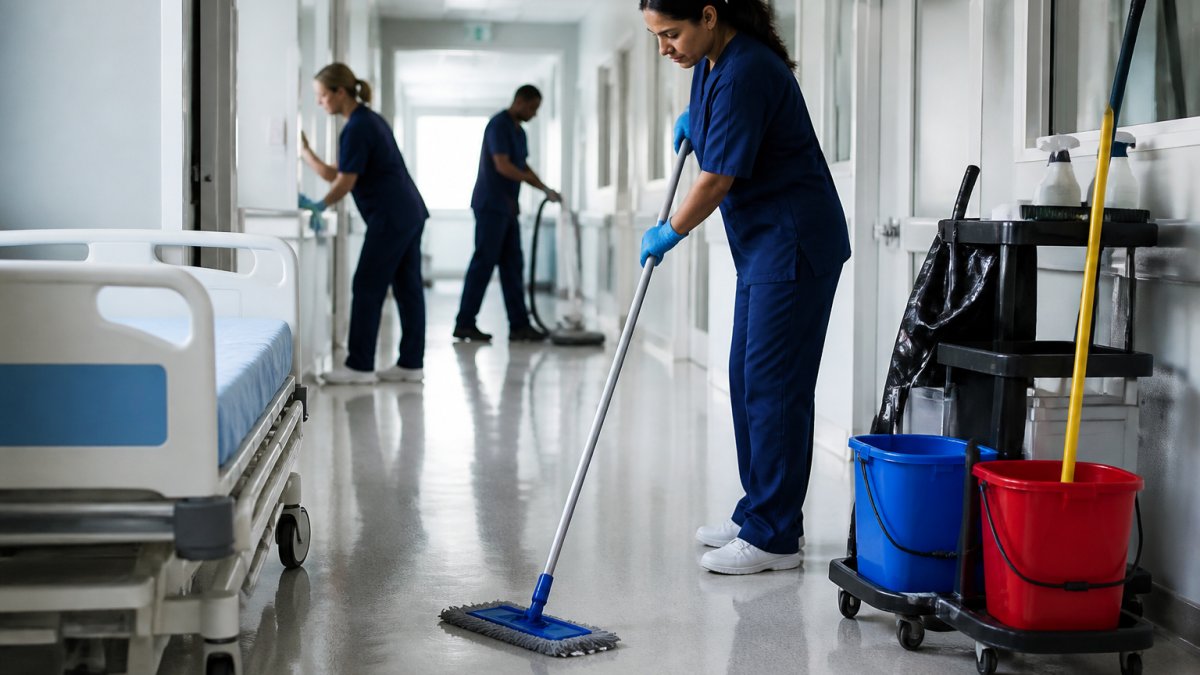
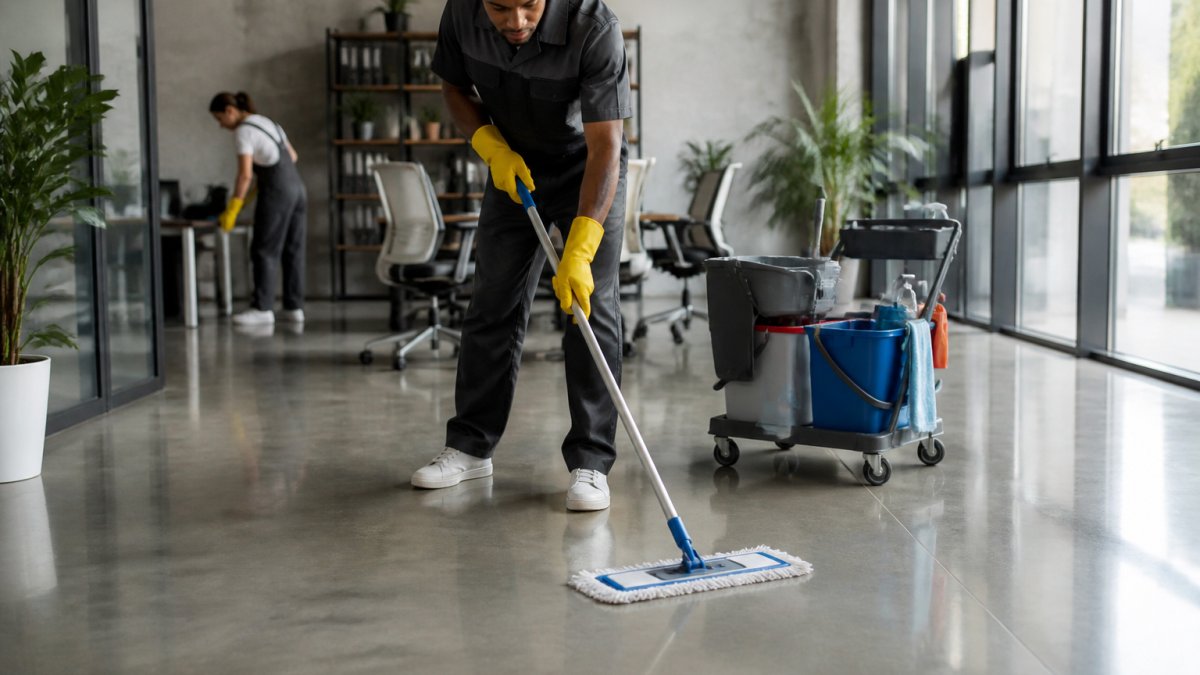
General janitorial work covers the basics of a clean building. Crews vacuum carpets, mop hard floors, empty trash, dust surfaces, and clean restrooms. The goal is a space that looks and smells clean.
That standard works for offices, retail stores, and schools. It does not address microbial load. A conference table can look spotless and still carry pathogens.
Typical general janitorial tasks:
- Vacuuming and carpet spotting
- Mopping and floor buffing
- Trash removal and restroom restocking
- Dusting desks, ledges, and vents
- Window and entry glass cleaning
What Medical Clinic Cleaning Requires
Medical clinic cleaning adds infection control to every task. Cleaners must reduce pathogen transfer between patients, staff, and surfaces. That means EPA-registered disinfectants, strict dwell times, and documented protocols.
It also means knowing what counts as contaminated. A waiting room chair, a blood pressure cuff, and a lab counter each need different handling. General crews are not trained for that distinction.
Key differences:
- Disinfection of high-touch surfaces, not just wiping
- Biohazard waste segregation and disposal
- Terminal cleaning between patient cohorts
- Compliance documentation for inspections
|
Factor |
General Janitorial |
Medical Clinic Cleaning |
|---|---|---|
|
Primary goal |
Appearance |
Infection control |
|
Chemicals |
General cleaners |
EPA-registered disinfectants |
|
Training |
Basic safety |
Bloodborne pathogen training |
|
Waste handling |
Standard trash |
Biohazard waste streams |
|
Documentation |
Minimal |
Compliance logs |
|
Frequency |
Scheduled |
Risk-based protocols |
OSHA Bloodborne Pathogens Standards for Cleaning
OSHA’s bloodborne pathogens standard, 29 CFR 1910.1030, applies to any worker with occupational exposure to blood or other potentially infectious materials. That includes cleaning staff in medical facilities, not just clinical employees. The regulation is the single clearest dividing line between a general janitorial crew and a medical-grade operation, because it imposes written, auditable obligations on the employer.
Under the standard, the employer, not the individual cleaner, carries the compliance burden. That means the cleaning contractor must maintain a written exposure control plan, review and update it at least annually, and make it accessible to employees.
Key employer obligations under 1910.1030:
- Maintain a written exposure control plan, reviewed and updated at least annually
- Offer the hepatitis B vaccine free of charge within 10 working days of initial assignment, unless the employee has already had it or declines in writing
- Provide appropriate PPE, gloves, gowns, eye and face protection, at no cost, in the right sizes
- Train employees at initial assignment and at least annually thereafter, with a qualified trainer and interactive Q&A
- Maintain a sharps injury log and a confidential medical record for each employee with occupational exposure
- Provide a confidential post-exposure medical evaluation and follow-up at no cost after any exposure incident
For cleaning teams, this translates to specific on-the-floor practices:
- Treat all blood and body fluids as infectious, universal precautions, no exceptions
- Use gloves, gowns, and eye protection where splashes, sprays, or splatters are reasonably anticipated
- Place contaminated sharps in puncture-resistant, closable, labeled containers immediately after use
- Never pick up broken glass or sharps with hands, even gloved hands
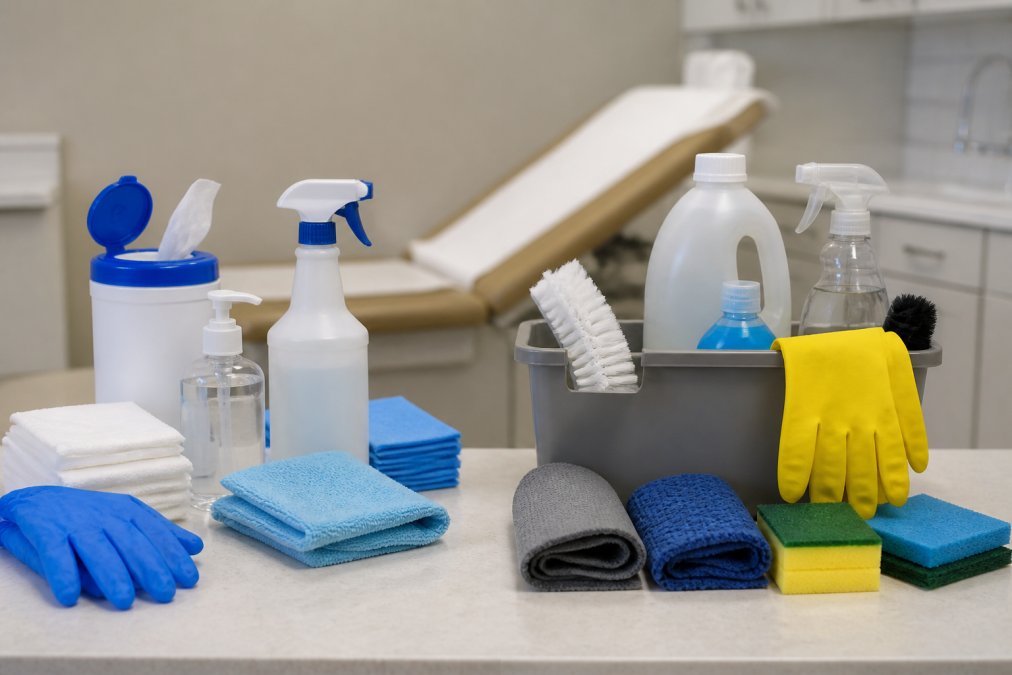
- Decontaminate reusable equipment and surfaces with an appropriate EPA-registered disinfectant
- Report and document any exposure incident so the employer can trigger the post-exposure evaluation
For a clinic evaluating vendors, the practical test is simple: ask to see the exposure control plan, the annual training records, and the sharps injury log. A medical-grade contractor will produce them. A general janitorial bid usually cannot.
Infection Control and High-Touch Surface Disinfection
High-touch surfaces drive most pathogen transfer in a clinic. Door handles, light switches, exam tables, and waiting room chairs get touched constantly. They need disinfection, not just cleaning.
Cleaning professional disinfecting a door handle and light switch for medical clinic cleaning in a bright waiting room
EPA-Registered Disinfectants and Contact Time
EPA-registered disinfectants are products the agency has reviewed for specific pathogen claims. Contact time is how long the surface must stay wet for the product to work.
Watch for these mistakes:
- Wiping dry before the contact time ends
- Using one cloth across multiple rooms
- Mixing disinfectants with general cleaners
- Skipping dwell time on high-touch items
Terminal Cleaning vs Routine Maintenance
Terminal cleaning is a deep, full-room disinfection done when a patient area is vacated or after a contamination event. Routine maintenance keeps the space clean between patients.
Medical Office Cleaning Checklist
A medical office cleaning checklist turns infection control into daily, repeatable steps. It should cover every room type and every shift, with sign-off for accountability.
Use this as a starting framework:
- Disinfect all high-touch surfaces (handles, switches, rails)
- Clean and disinfect exam tables between patients
- Restock soap, sanitizer, and paper products
- Empty and replace liners in all waste bins
- Segregate biohazard waste into proper containers
- Mop floors with a hospital-grade disinfectant
- Clean restrooms with dedicated color-coded tools
- Log completion time and any issues for the facility manager
Cross-Contamination Prevention and Biohazard Waste Handling
Cross-contamination happens when cleaning tools move pathogens from a dirty area to a clean one. The fix is simple in principle: separate tools, separate zones, one direction of travel.
Prevention basics:
- Change mop water and cloths often
- Clean from clean areas toward dirty areas
- Never shake or dry-dust in clinical spaces
- Seal and label all biohazard bags before removal
How to Choose a Medical Cleaning Service
Choosing a medical cleaning service comes down to three things: infection-control training, documented protocols, and accountability. A low bid means nothing if the crew cannot prove how they disinfect.
- Can you show your bloodborne pathogen training records?
- Which EPA-registered disinfectants do you use, and what are the contact times?
- How do you handle biohazard waste and sharps?
- What does your quality assurance process look like?
- Can you provide references from other medical facilities?
Training, Quality Assurance, and Compliance Auditing
Training, quality assurance, and compliance auditing keep a cleaning program honest. Training builds the skill. QA checks the work. Auditing proves it to inspectors and patients.
Liability, Insurance, and the Cost of Getting It Wrong
Liability is the hidden cost of a cheap cleaning contract, and it is the angle most articles on this topic skip entirely. If a clinic’s cleaning program fails, the clinic usually carries the risk, not just the vendor. Understanding how that risk transfers is the difference between a defensible contract and an uninsured exposure.
Coverages that matter in a medical cleaning contract:
- General liability, covers third-party bodily injury and property damage on the premises. Standard for any commercial cleaner, but limits vary widely.
- Professional liability / errors and omissions, covers claims that the service itself was performed negligently. Many general janitorial policies exclude this, which is a red flag in a clinical setting.
- Workers’ compensation, covers the cleaning crew if they are injured on site. If the vendor’s coverage lapses, the clinic can be pulled into the claim.
- Commercial auto, covers the crew’s vehicles traveling to and from the facility.
- Cyber and pollution riders, increasingly relevant where biohazard waste, regulated medical waste, or patient-adjacent data is involved.
The cost-benefit math favors doing it right:
- Proper disinfection reduces infection risk and patient harm
- Documentation protects the facility in audits and claims
- Trained staff lower turnover and rework costs
- A consistent program avoids emergency deep-cleaning bills
- Verified insurance and indemnification shift risk back to the vendor where it belongs
Frequently Asked Questions
What are the risks of using general janitorial services for a medical clinic?
General janitorial crews typically lack training in bloodborne pathogen handling, EPA-registered disinfectant use, and biohazard waste segregation. Without those protocols, high-touch surfaces may not reach the required contact time for pathogen reduction, cross-contamination between exam rooms and common areas becomes likely, and your facility risks OSHA citations. The gap is not effort; it is the specific infection control knowledge and documentation that medical clinic cleaning demands.
What training do cleaners need for medical office environments?
Staff should complete bloodborne pathogen training aligned with OSHA standards, learn proper PPE use, understand disinfectant dwell times, and follow color-coded cloth and mop systems to prevent cross-contamination. Training should also cover biohazard waste handling, sharps container awareness, and safe chemical use around patients. Documented, recurring training matters because OSHA compliance depends on records, not just good intentions. Ask any medical cleaning service how often staff retrain and whether records are available.
How does medical-grade disinfection differ from standard office cleaning?
Standard office cleaning removes visible dirt and dust. Medical-grade disinfection targets microbial load reduction on high-touch surfaces using EPA-registered disinfectants applied with the correct contact time. Medical clinic cleaning also includes terminal cleaning protocols between patients or at day’s end, biohazard waste segregation, and documentation that supports compliance auditing. The outcome difference is measurable: fewer healthcare-associated infections and a defensible infection control record.
How much does medical clinic cleaning cost compared to general janitorial services?
Pricing depends on facility square footage, number of exam and procedure rooms, cleaning frequency, and the scope of disinfection required. Medical clinic cleaning often involves specialized training, EPA-registered disinfectants, and compliance documentation. Rather than quoting a flat rate, request a walkthrough and a written scope of work. A reputable provider will itemize services so you can compare bids on equal terms.