
Table of Contents
- Why Schools Need Professional Janitorial Services
- Key Differences Between School Cleaning and Standard Commercial Cleaning
- Creating a Janitorial Service RFP Template for Schools
- Best Practices for School Floor Maintenance
- Comparing Janitorial Service Providers
- Compliance, Safety, and Industry Standards
- Technology and Accountability in School Janitorial Operations
- Budgeting for Janitorial Services in Schools
- Frequently Asked Questions
Last Updated: September 27, 2026
Why Schools Need Professional Janitorial Services
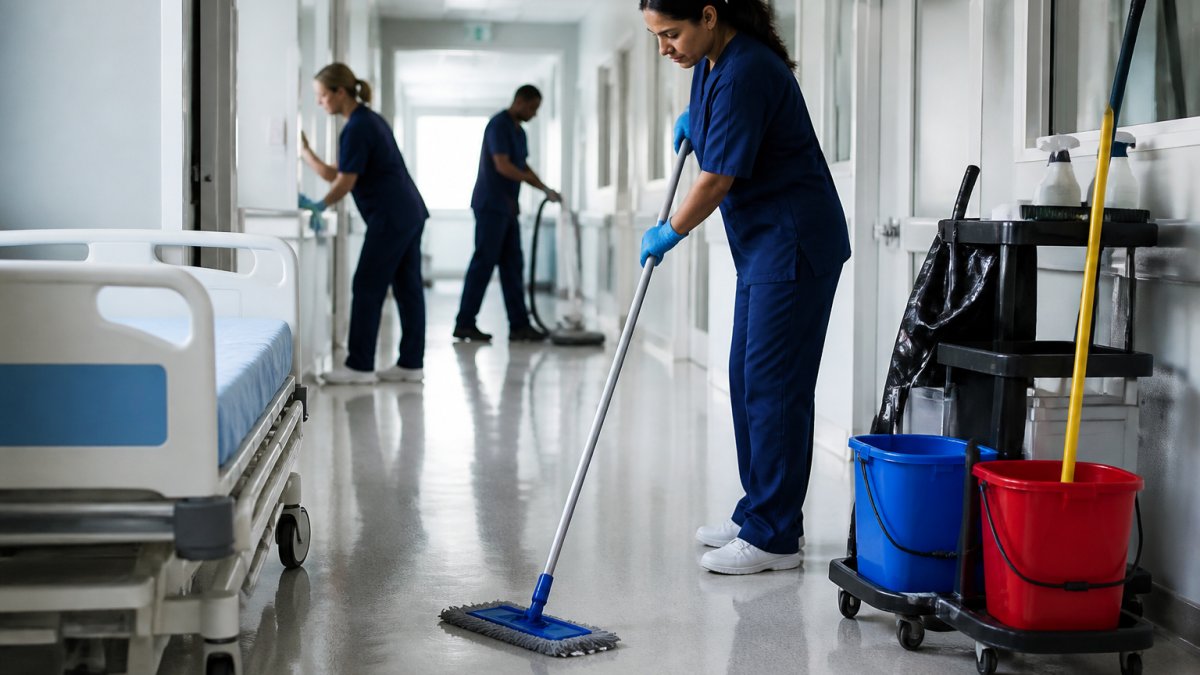
When hiring janitorial services for schools 2026, cleanliness directly impacts student health, attendance, and academic performance. Professional janitorial services deliver the consistency that in-house teams struggle to maintain, especially when staffing fluctuates or budget constraints limit training and equipment investment.
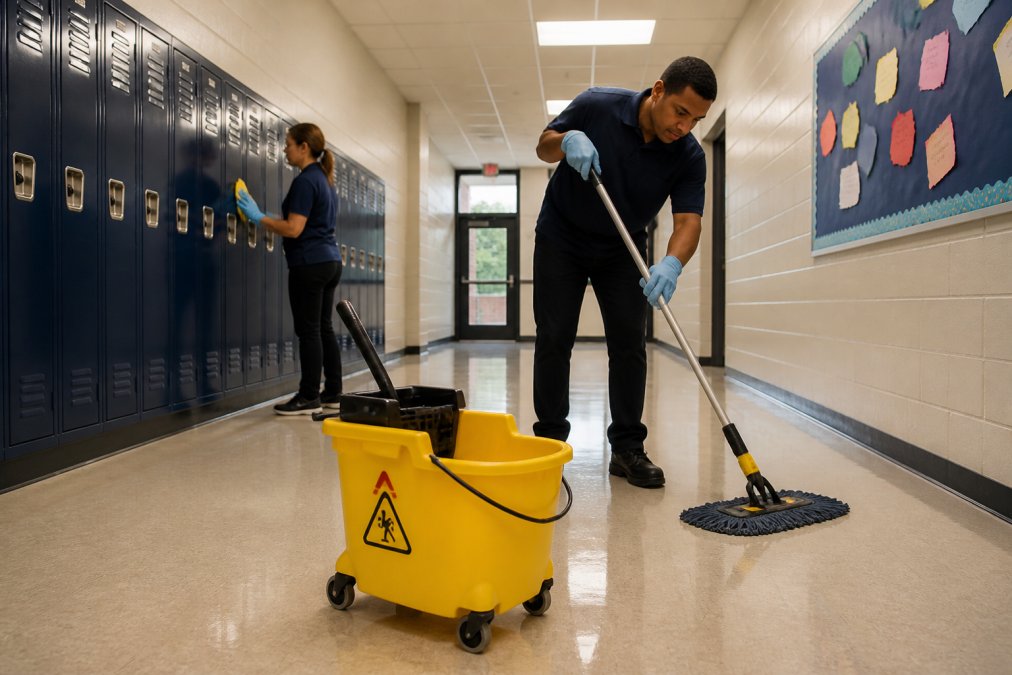
Schools require specialized attention to high-traffic corridors, cafeteria spaces, gymnasium floors, and restrooms where contamination risk runs highest. A single outbreak can close a school and damage its reputation.
Outsourcing janitorial operations allows administrators to focus on instruction. Professional custodial staff bring expertise in school sanitation standards, compliance requirements, and efficient workflows. Most schools operate on compressed schedules, cleaning must happen before students arrive and after they leave, which demands precision and accountability.
Professional janitorial services reduce liability, improve student health outcomes, and free administrative staff to focus on education rather than facility management.
Key Differences Between School Cleaning and Standard Commercial Cleaning
School environments present unique cleaning challenges. Schools operate on rigid schedules with concentrated foot traffic, meaning custodial work must be compressed into morning and evening windows. Students generate higher volumes of waste, tracked dirt, and biological contaminants than typical commercial occupants.
Cafeterias require deep sanitization of food preparation areas daily. Gymnasium floors need specialized floor care to prevent slipping hazards. Restrooms require more frequent disinfection cycles. Classrooms accumulate dust and allergens that affect air quality.
School cleaning demands compliance with health codes, allergen management, and cross-contamination prevention. Schools need permanent, vetted custodial staff with background screening and training specific to educational environments.
Creating a Janitorial Service RFP Template for Schools
An RFP (Request for Proposal) is the formal mechanism schools use to evaluate janitorial service providers and ensure competitive pricing. A well-structured RFP prevents miscommunication and creates a documented basis for comparing vendor responses.
Essential RFP Components
Your RFP should specify square footage, number of buildings, areas requiring service (classrooms, cafeterias, gymnasiums, restrooms), and cleaning frequency. Distinguish mandatory services from optional or seasonal ones, such as post-construction cleanup or deep cleaning.
Include detailed cleaning specifications for each area type. For high-traffic corridors, specify floor type (VCT, tile, carpet), cleaning frequency, and floor care requirements like propane buffing. For cafeterias, specify food-safe disinfection protocols. For restrooms, define disinfection schedules and restocking requirements.
Define staffing requirements: number of full-time positions, shift times, certifications, and background screening standards. Specify whether you want permanent staff or rotation. Clarify sick leave coverage and service continuity.
Establish accountability mechanisms: response time for requests, quality inspection protocols, and dispute resolution. Request references from other schools. Include insurance requirements, bonding, and liability coverage minimums.
Evaluation Criteria for Vendor Responses
Weight evaluation criteria to reflect your school’s priorities. Pricing typically carries 30-40% weight but should never be the sole factor. Vendor experience in school environments should carry significant weight, companies with track records understand compliance requirements and scheduling constraints.
Service quality indicators deserve substantial weight: references from school clients, certifications in school sanitation, and quality assurance processes. Evaluate their staffing plan, do they commit to permanent staff or temporary placements? Permanent staffing delivers better continuity and accountability.
Assess technology and communication capabilities. Can they provide real-time updates on service completion? Do they use management software for work order tracking and quality inspection? Vendors using accountability tools demonstrate commitment to transparency.
| Evaluation Criterion | Weight | Scoring Method |
|---|---|---|
| Pricing and contract terms | 35% | Total cost comparison; payment flexibility |
| School experience | 25% | Years in education sector; client references |
| Quality assurance processes | 20% | Inspection protocols; staff training programs |
| Technology and communication | 15% | Software tools; response time; reporting |
| Staffing stability | 5% | Permanent vs. temporary; turnover rates |
Best Practices for School Floor Maintenance
Floor care is one of the most visible aspects of school facility management. Floors accumulate dirt, moisture, bacteria, and allergens affecting appearance and air quality. Systematic floor maintenance extends flooring life and maintains slip-resistant properties critical in schools.
Floor Care Protocols for High-Traffic Areas
School corridors, cafeterias, and entryways experience concentrated foot traffic. These areas require daily sweeping and damp mopping with appropriate disinfectants. Floor care frequency directly correlates with facility cleanliness and student health outcomes.
VCT (Vinyl Composition Tile) floors require specialized maintenance. Regular sweeping removes abrasive particles. Damp mopping with pH-neutral cleaners prevents buildup. Periodic propane buffing restores the protective finish and creates slip-resistant surfaces critical in high-traffic areas.
Gymnasium floors require regular dust mopping to prevent slipping hazards. Specialized finishes need periodic recoating. Improper maintenance creates liability risks and shortens floor lifespan.
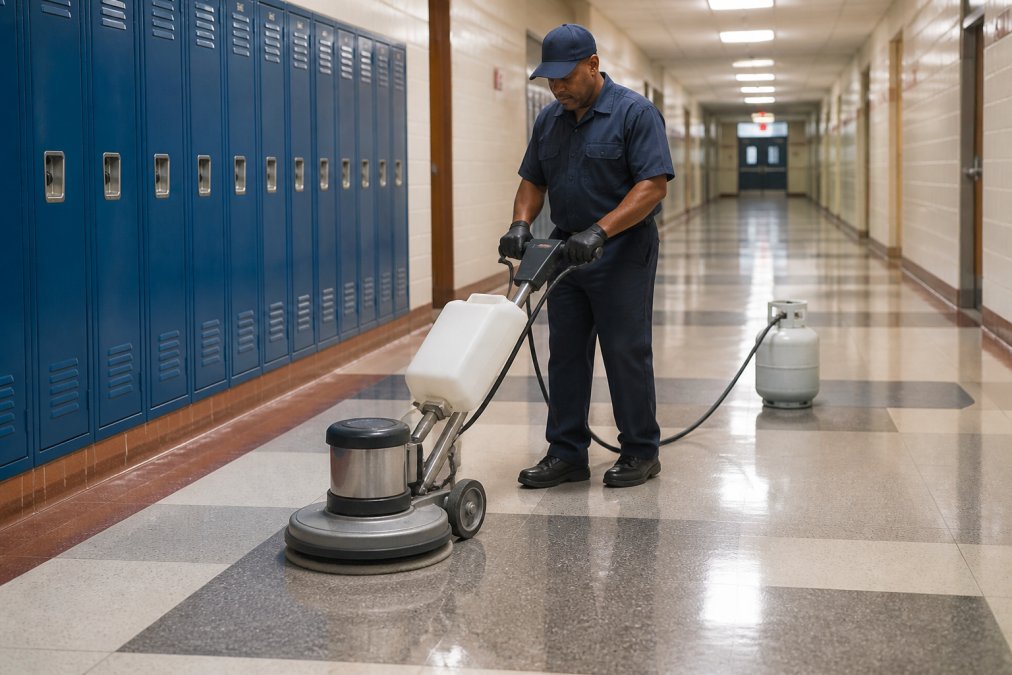
Schedule propane buffing during low-occupancy periods or during facility closures to avoid exposing students to equipment and fumes. A well-maintained floor finish prevents costly damage and reduces slip-and-fall liability.
Post-Construction Cleanup and Deep Cleaning
School renovation and construction projects generate substantial debris, dust, and contamination that standard daily cleaning cannot address. Post-construction cleanup requires specialized protocols, equipment, and attention to detail that separates professional service from routine maintenance.
After construction concludes, dust settles on all surfaces, walls, light fixtures, HVAC vents, and floors.
Comparing Janitorial Service Providers
Evaluating janitorial service providers requires understanding the trade-offs between different service models. Full-time staffing, contract services, and turnkey solutions each offer distinct advantages and limitations depending on your school’s size, budget, and operational priorities.
Full-Time Staffing vs. Contract Services
Full-time staffing means the vendor assigns permanent custodial employees to your facility. These staff members become familiar with your building, understand your specific needs, and develop accountability for the facility’s appearance. Continuity improves quality and allows for proactive maintenance rather than reactive problem-solving. Full-time staff typically receive more comprehensive training and maintain higher engagement with their assigned facility.
Turnkey Solutions for Educational Facilities
Turnkey solutions bundle routine janitorial service with specialized projects into a single comprehensive contract. Rather than managing separate vendors for daily cleaning, post-construction cleanup, and deep cleaning, schools work with one provider for all facility maintenance needs. This integration simplifies communication, ensures consistent standards, and often reduces overall costs through operational efficiency.
Compliance, Safety, and Industry Standards
Schools must comply with health codes, OSHA regulations, and facility standards that govern custodial operations. Understanding these requirements protects student health and shields schools from liability.
Failure to verify vendor compliance with health and safety regulations exposes schools to liability. A vendor cutting corners on disinfection or chemical safety creates both health risks and legal exposure. Verify certifications and insurance before contracting.
Technology and Accountability in School Janitorial Operations
Modern janitorial management increasingly relies on software platforms that enable real-time communication, quality tracking, and accountability. Schools benefit from vendors who embrace technology to improve transparency and service delivery.
Budgeting for Janitorial Services in Schools
Janitorial service costs vary based on facility size, cleaning frequency, service scope, and local market conditions. Schools should budget for routine maintenance, seasonal deep cleaning, and periodic specialized projects like post-construction cleanup.
Frequently Asked Questions
What certifications should school janitorial services hold in 2026?
Professional janitorial staff should hold certifications from ISSA (The Worldwide Cleaning Industry Association) and understand OSHA safety standards for school environments. Staff should be trained in bloodborne pathogen protocols, chemical safety, and health-focused cleaning practices. Background screening and experience working in educational settings are essential. When evaluating hiring janitorial services for schools, verify that providers maintain current certifications and conduct ongoing professional development for their custodial staff.
How do school cleaning requirements differ from standard commercial cleaning?
Schools require specialized attention to high-traffic corridors, cafeterias, bathrooms, and classroom surfaces where children congregate. Disinfection protocols must meet stricter health standards, especially post-pandemic. Schools often need deep cleaning during breaks and post-construction cleanup after renovations. Custodial staff must understand child safety protocols and use non-toxic cleaning products in classrooms. Floor maintenance in schools demands frequent buffing and VCT care due to constant foot traffic. Schools also require turnkey solutions that coordinate seamlessly with academic calendars.
What are the benefits of hiring a turnkey janitorial service for educational facilities?
Turnkey janitorial services eliminate the need for schools to manage multiple vendors or hire and train custodial staff independently. These comprehensive solutions include floor cleaning, post-construction cleanup, deep cleaning, and ongoing maintenance, all coordinated under one provider. Schools benefit from consistent quality, predictable budgeting, accountability through single-point contact, and flexibility to scale services seasonally. Turnkey providers handle staff scheduling, equipment maintenance, and supply procurement, allowing school administrators to focus on education rather than facility operations.
How can schools ensure consistent cleaning quality throughout the academic year?
Include specific quality standards in your RFP and service contract, such as inspection schedules and response times for complaints. Use technology platforms that track cleaning completion and allow real-time communication between custodial staff and administrators. Schedule regular facility inspections and establish clear accountability measures. Require your janitorial service provider to conduct ongoing staff training and maintain detailed cleaning logs. Build strong communication channels so issues are addressed immediately rather than accumulating. Request monthly performance reports and hold quarterly reviews to discuss maintenance needs and adjust protocols as needed.
How much do schools typically pay for janitorial services?
Janitorial service costs vary significantly based on school size, facility condition, service frequency, and regional labor rates. Factors affecting pricing include square footage, number of buildings, specialized services like post-construction cleanup or floor buffing, and whether you hire full-time custodial staff versus contract services. Schools should request custom quotes from multiple providers to compare pricing models. For accurate pricing tailored to your specific facility needs and budget, contact local janitorial service providers directly for detailed estimates based on your school’s requirements.
What should schools look for when evaluating janitorial service providers?
Evaluate providers based on industry experience, certifications, and references from other schools. Review their expertise in specialized services like floor care, post-construction cleanup, and deep cleaning. Assess their staffing stability, background screening practices, and compliance with health and safety regulations. Request details on their accountability measures, communication systems, and response times for issues. Ask about their experience with school-specific challenges like high-traffic corridors and seasonal deep cleaning. Verify they understand your facility’s unique needs and can provide customized, turnkey solutions that fit your budget and operational requirements.